Eremopterix nigriceps belongs to the family Alaudidae (larks) and is native to arid and semi-arid regions of Africa, the Middle East, and South Asia, including countries such as Burkina Faso, Chad, Ethiopia, India, Saudi Arabia, and Cape Verde.
Specifically in Cape Verde, its type locality is the island of Santiago, where the species has been known for quite some time.
Specifically in Cape Verde, its type locality is the island of Santiago, where the species has been known for quite some time.
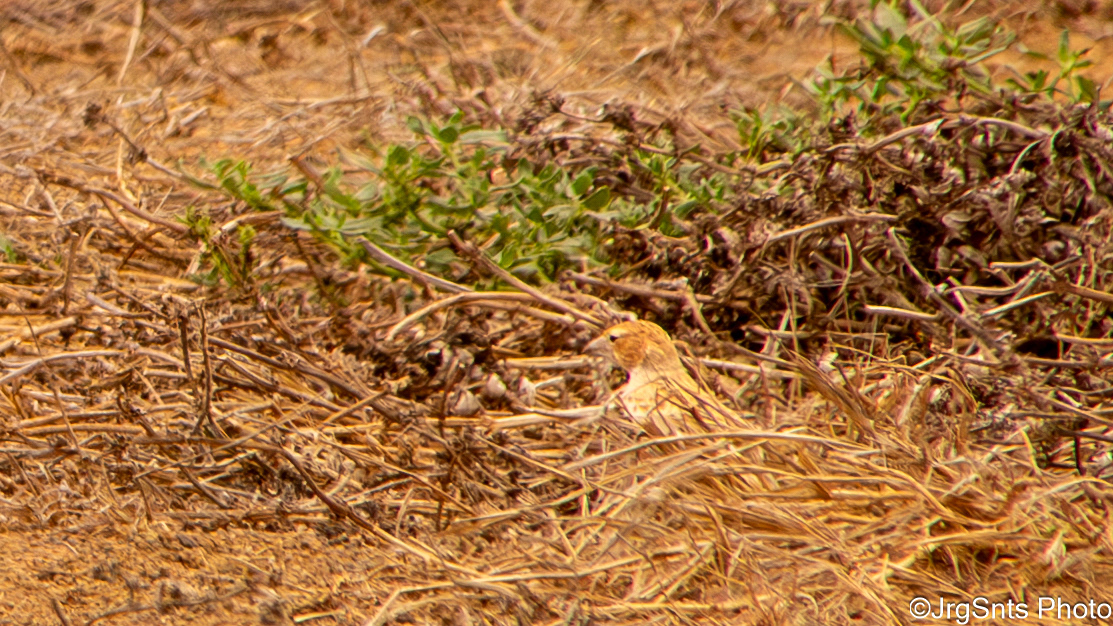
The recent record on the island of Sal, documented for the first time through the photographs presented here, may indicate an expansion within the archipelago, possibly driven by environmental factors such as climate change, which are making new areas more suitable to its arid habitat.
According to climate data from the Sal region, there has been a trend of increasing average annual temperature over the past 40 years, and precipitation has shown variations, tending toward drier conditions.
This may have made the island of Sal more hospitable to species adapted to arid environments, such as Eremopterix nigriceps, making the local ecosystem more compatible with its preferred habitat.
Furthermore, the bird’s nomadic behavior facilitates its rapid response to environmental changes, such as prolonged droughts or shifts in vegetation.
Although there is no direct scientific confirmation, it is plausible that the recent appearance of Eremopterix nigriceps on the island of Sal is related to climate change.
According to climate data from the Sal region, there has been a trend of increasing average annual temperature over the past 40 years, and precipitation has shown variations, tending toward drier conditions.
This may have made the island of Sal more hospitable to species adapted to arid environments, such as Eremopterix nigriceps, making the local ecosystem more compatible with its preferred habitat.
Furthermore, the bird’s nomadic behavior facilitates its rapid response to environmental changes, such as prolonged droughts or shifts in vegetation.
Although there is no direct scientific confirmation, it is plausible that the recent appearance of Eremopterix nigriceps on the island of Sal is related to climate change.
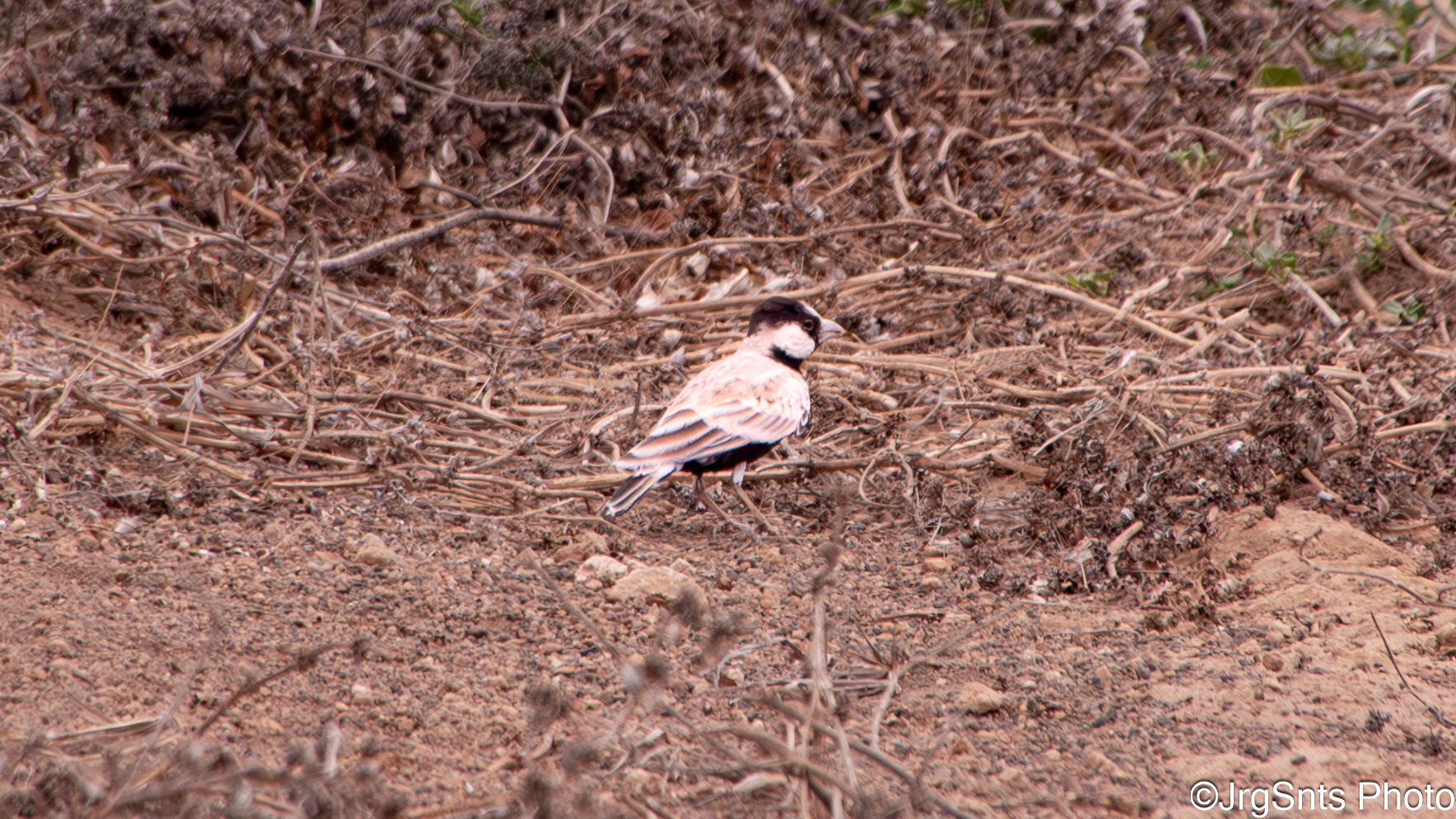
The two photos presented here were taken in 2023, in Sal Island (Cape Verde), while travelling in the desert area. These are shots done from a reasonable distance (around 100 meters).
In the photo on the top right, we can see the Eremopterix nigriceps (female), in her nest.
In the image shown below left, we can see the Eremopterix nigriceps (male).
If you can't find the image you'd like to purchase, contact the author directly here.
This page was updated in: 2025.december.16